The Financial Cost of Poor Core Web Vitals and INP
Understand how poor Core Web Vitals—specifically the new Interaction to Next Paint (INP) metric—directly impact your conversion rates and revenue.
For years, marketers have known that "site speed matters." However, speed is no longer just a vague best practice; it is a strictly measured, highly penalized ranking factor enforced by Google through Core Web Vitals. More importantly, poor Web Vitals directly bleed revenue through abandoned carts and high bounce rates.
The Direct Link Between Speed and Revenue
The business case for technical speed optimization is grounded in hard data. E-commerce giants and SaaS companies have rigorously tested the impact of latency on conversion rates (CRO):
- Amazon famously found that every 100ms of latency cost them 1% in sales.
- Vodafone improved their LCP (Largest Contentful Paint) by 31% and saw an 8% increase in sales.
- Deloitte found that a 0.1-second improvement in site speed resulted in an 8.4% increase in conversions for retail sites.
If your website generates $100k a month, a 1-second delay could be costing you over $80,000 a year in lost conversions. This is why our Website Speed Optimization Services focus on bottom-line ROI, not just vanity metrics.
Enter INP: The New Standard for Interactivity
In March 2024, Google replaced First Input Delay (FID) with a much stricter metric: Interaction to Next Paint (INP). INP measures the overall responsiveness of your page to user interactions (clicks, taps, and keyboard inputs) throughout the entire lifespan of the user's visit.
If a user clicks "Add to Cart" and the button visually freezes for half a second while heavy JavaScript executes in the background, your INP score will fail. A poor INP tells the user your site is broken, leading to immediate abandonment.
Why Standard Websites Fail Core Web Vitals
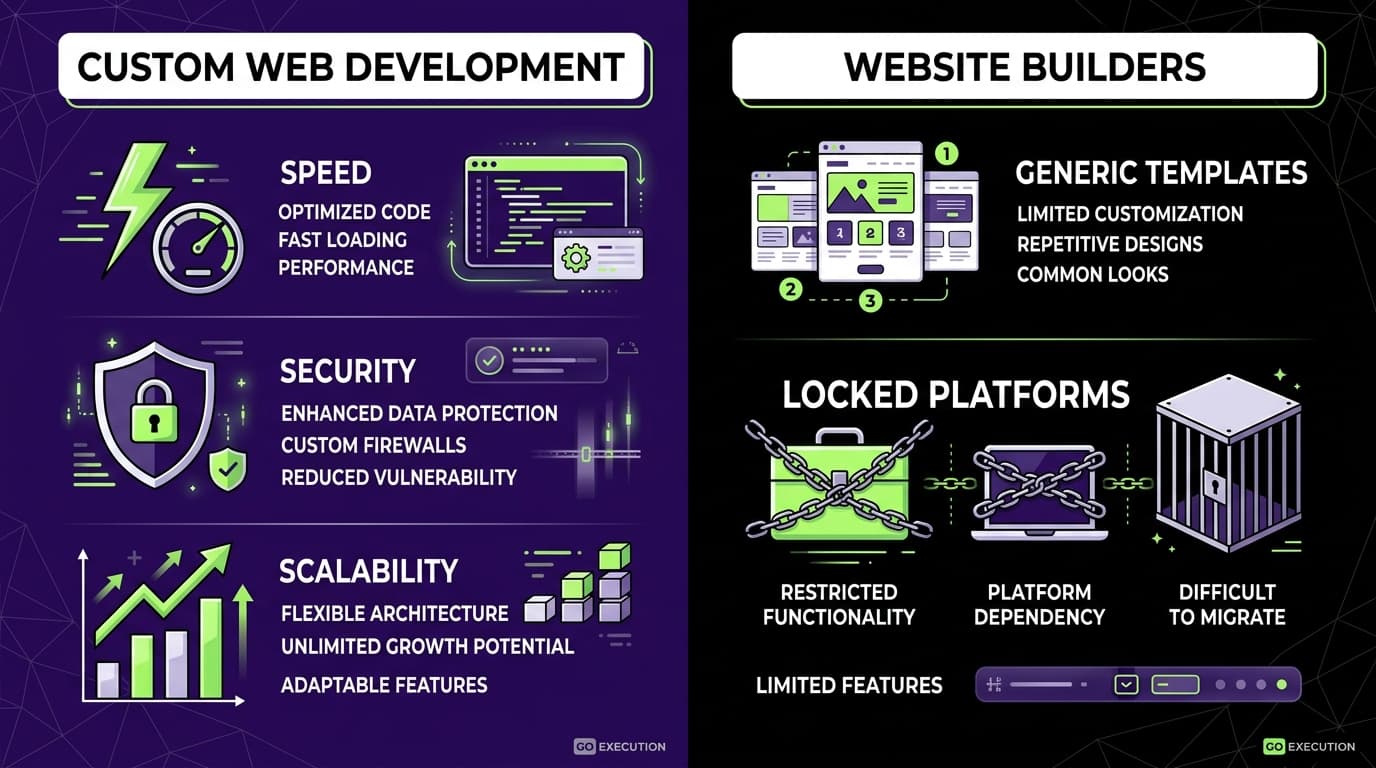
Most legacy websites built on traditional monolithic CMS platforms (like standard WordPress or Magento) fail Core Web Vitals because:
- They rely heavily on unoptimized, render-blocking JavaScript.
- They suffer from layout shifts (CLS) caused by dynamic ad injections or poorly sized hero images.
- They rely on slow server-side database queries for every page load, ruining LCP.
The Next.js Solution
Fixing severe Core Web Vitals issues often requires more than just installing a caching plugin; it requires architectural change. Modern frameworks like Next.js natively solve these issues through Static Site Generation, automatic image optimization, and edge network delivery. Discover how we build instantly loading experiences on our Next.js Development Services page.
Stop losing revenue to slow load times. Contact Go Execution today for a comprehensive Core Web Vitals audit and engineering roadmap.