Generative Engine Optimization (GEO): The Complete Guide to Ranking in AI Search (2026)
Master Generative Engine Optimization (GEO) in 2026. Discover how to get cited in Google AI Overviews, ChatGPT Search, and Perplexity with verified research and data.
Search has crossed a historic threshold. For over two decades, search engine optimization meant a predictable battle: target a keyword, build backlinks, and compete for position one on the Google search engine results page (SERP). Today, that linear model is fundamentally broken.
Between Google's unified rollout of AI Overviews and Gemini-powered AI Mode—now reaching over 2.5 billion monthly active users across 200+ countries—and conversational search engines like ChatGPT Search (900 million weekly active users) and Perplexity AI (500+ million monthly queries), the interface of discovery has transformed from a list of links into an authoritative synthetic answer.
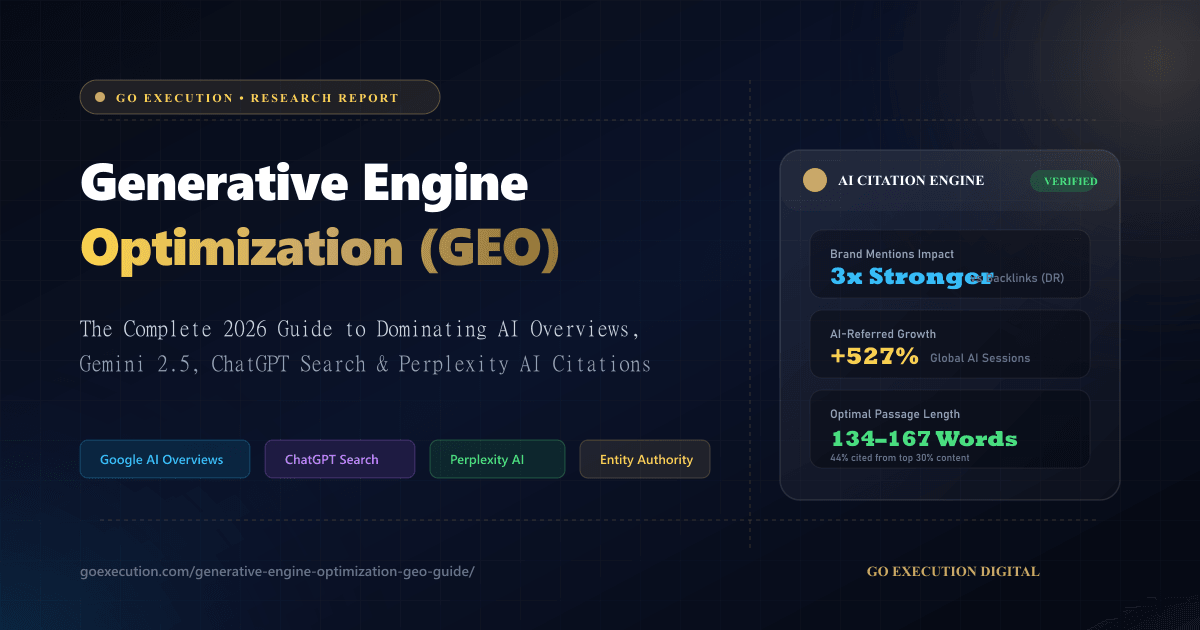
According to SparkToro research, AI-referred search sessions exploded by 527% in recent quarters. If your business relies solely on traditional SEO playbooks, you are optimizing for an interface that is rapidly disappearing. Here is the comprehensive, data-backed blueprint for mastering Generative Engine Optimization (GEO) in late 2026.
Traditional SEO vs. Generative Engine Optimization (GEO)
To succeed in AI search, founders and marketing executives must understand how generative engines evaluate credibility compared to legacy search algorithms. The following table contrasts the two paradigms:
| Optimization Factor | Traditional SEO (Legacy) | Generative Engine Optimization (GEO) |
|---|---|---|
| Primary Objective | Rank in positions 1–3 for specific commercial keywords | Earn AI source citations, direct answer pills, and brand recommendations |
| Authority Currency | PageRank, domain backlink volume, and anchor text | Multi-channel entity citations, brand co-occurrences, and community consensus |
| Content Structuring | Monolithic long-form articles targeting keyword frequency | Modular, 134–167 word self-contained answer blocks with front-loaded conclusions |
| Technical Requirement | Crawlable HTML; client-side JS tolerated via Googlebot render phase | Strict Server-Side Rendering (SSR) / Static Generation; zero JS execution overhead for LLM bots |
| Data Markup | Basic Article, Breadcrumb, and Product schemas | Comprehensive Schema.org entity graphs linking corporate sameAs nodes across external registries |
| Freshness Sensitivity | Moderate; older high-authority pages often maintain rank | Critical; pages refreshed within 90 days are 3x more likely to be cited by LLMs |
The Critical Discovery: Why Brand Mentions Trump Backlinks in AI Search
The single most disruptive finding in modern search research comes from an extensive study of 75,000 brands conducted by Ahrefs. In traditional Google organic rankings, backlink metrics like Domain Rating (DR) and URL Rating (UR) demonstrate strong predictive power.
In generative AI engines, however, that correlation collapses:
- YouTube Brand Mentions: ~0.737 correlation with AI citations (the strongest signal tested)
- Reddit Community Discussions: Exceptionally high correlation, particularly for commercial recommendations
- Wikipedia & Wikidata Entity Presence: High correlation across ChatGPT and Perplexity
- LinkedIn Executive Publications: Moderate-to-high correlation for B2B queries
- Traditional Domain Rating (Backlinks): Merely ~0.266 correlation (weak)
Why does this disparity exist? Large Language Models (LLMs) are trained on massive multidimensional vector spaces. When an LLM generates a response to a query like "What are the best enterprise Next.js development agencies?", it computes probabilistic associations between tokens. A brand mentioned hundreds of times across Reddit threads, YouTube transcripts, and industry case studies holds immense vector weight—even if those mentions do not contain an HTML hyperlink.
Furthermore, an analysis of 540,000 query pairs revealed that only 11% of domains are cited by both ChatGPT and Google AI Overviews for the exact same query. ChatGPT draws heavily on curated web datasets (with Wikipedia accounting for 47.9% of reference citations and Reddit 11.3%), whereas Google AI Overviews blends classic search ranking factors with real-time Gemini grounding. Relying on a single optimization channel is no longer viable.
The 5 Core Pillars of High-Impact GEO
Building an impenetrable moat in AI search requires engineering across five interconnected pillars:
1. Modular Passage Citability & Answer Front-Loading
AI models do not read web pages linearly from header to footer; they extract and score semantic chunks. A landmark analysis by SE Ranking across 1.3 million AI citations revealed that:
- Optimal Passage Length: 134 to 167 words represents the statistical sweet spot for LLM citation extraction. Passages shorter than 80 words frequently lack contextual completeness, while paragraphs exceeding 200 words suffer from semantic dilution.
- The 30% Front-Loading Rule: Approximately 44% of all AI citations are drawn from the first 30% of a webpage's content. AI models heavily weight top-of-page definitions before user attention drops.
To capture these citations, implement an "Inverted Pyramid" structure. Begin every major section with a bold direct answer in the first 40–60 words, followed by verified supporting statistics, and conclude with strategic contextual links to your B2B content marketing services or specialized case studies.
2. Technical Web Architecture & Server-Side Rendering (SSR)
Here is an uncomfortable truth many agencies overlook: AI search crawlers do not execute JavaScript. While Googlebot historically allocated a secondary render queue for client-side JavaScript apps, crawlers like GPTBot, OAI-SearchBot, ClaudeBot, and PerplexityBot operate on strict resource constraints. They fetch raw HTML and parse text immediately.
If your website is built on a client-side Single Page Application (SPA) where content renders via client-side JavaScript hydration, AI crawlers ingest an empty DOM tree. Your content simply does not exist in their retrieval index.
This is why enterprise brands are migrating to modern frameworks like Next.js 16. With static generation (SSG) and Server-Side Rendering (SSR), every heading, table, and data point is baked directly into the static HTML payload on edge CDNs. Discover why engineering your platform with Next.js Development and rigorous Website Speed & Performance is the prerequisite foundation for generative search visibility, and learn more in our detailed guide on What Is Technical SEO?.
3. Entity Authority & The Cross-Platform Mention Flywheel
In traditional SEO, marketers built pages targeting isolated keywords like "best technical SEO agency". In GEO, search engines understand your brand as a semantic entity defined by attributes, relationships, and third-party consensus.
To establish your entity in the knowledge graphs of Google and OpenAI:
- Unify Your Digital Entity: Use JSON-LD schema with the
sameAsproperty to link your official website to your verified profiles on LinkedIn, Crunchbase, GitHub, and industry directories. - Seed Authentic Community Discussions: Actively engage in Reddit and professional forum discussions where buyers evaluate software and services. Authentic mentions in high-karma threads provide the training signals LLMs prioritize.
- Publish Video with Full Transcripts: Because YouTube transcripts are deeply integrated into Google's multimodal search models, publishing video walkthroughs of your methodology dramatically increases AI Overview recommendation rates.
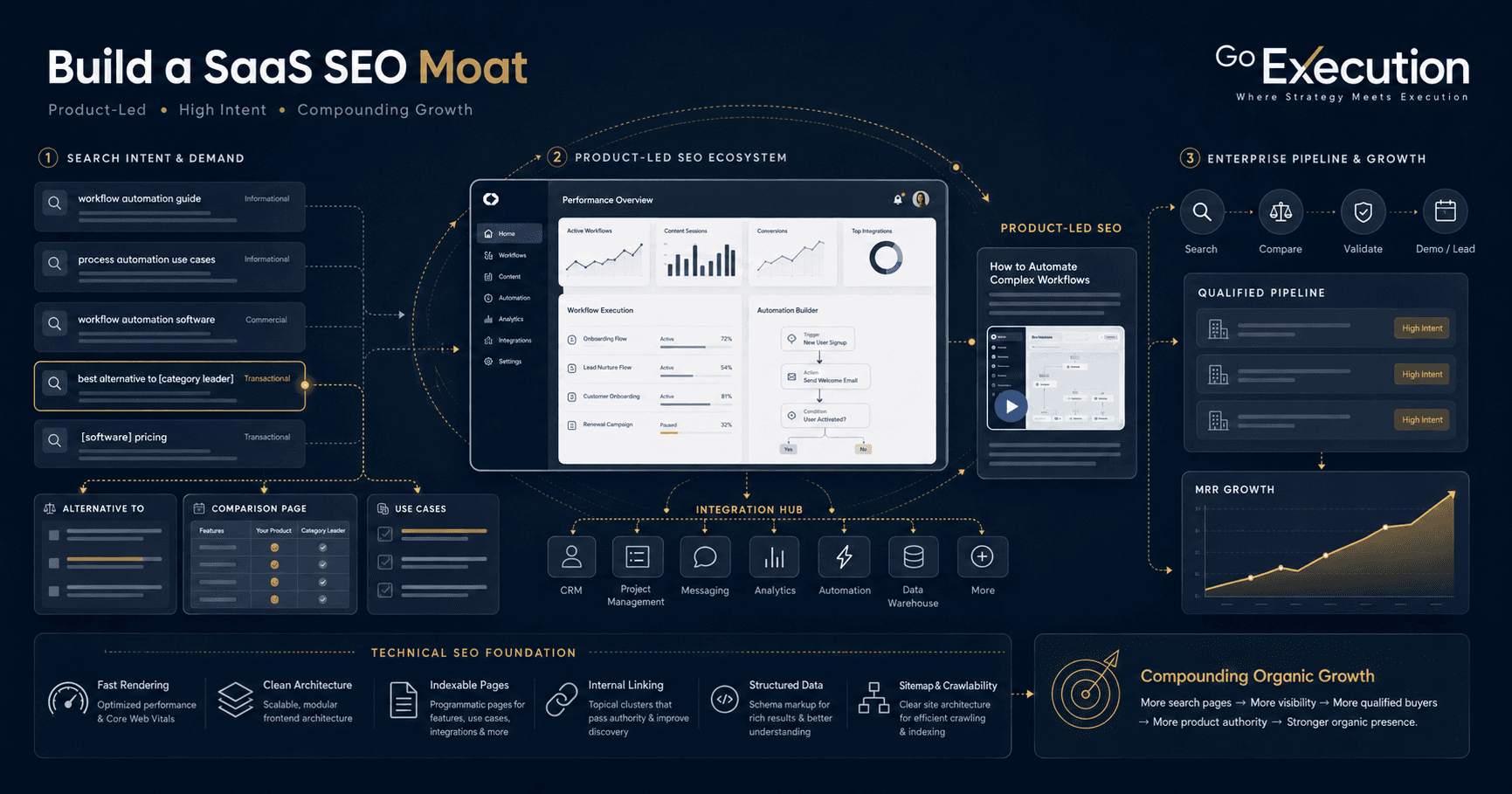
For high-growth software and tech firms, pairing this entity flywheel with a dedicated B2B SaaS SEO Strategy turns organic search into a compounding acquisition channel.
4. Semantic Graph Schemas & The llms.txt Reality
Structured data is the primary bridge between human-readable prose and machine-readable knowledge. To maximize AI discoverability, your pages must implement a cohesive JSON-LD graph connecting:
Organization: Outlining official brand name, founders, executive leadership, and physical locations.Article: Declaring verified author credentials, publication timestamps, and editorial reviewers.FAQPage: Encoding direct question-and-answer pairs that AI search snippets can extract directly into overview panels.BreadcrumbList: Mapping topological page hierarchy so AI models understand topical depth.
A Critical Clarification on llms.txt: In late 2024 and 2025, an open-source movement advocated for an /llms.txt markdown file at the website root to guide AI crawlers. However, in its official AI Optimization Guide (updated June 2026), Google Search Central explicitly stated that Google Search and AI Overviews ignore llms.txt entirely. While maintaining an llms.txt file is beneficial for independent agentic tools, it is not a ranking lever for Google. Focus your resources on robust Technical SEO Services and verified schema implementation instead.
5. Content Freshness & Update Velocity
Static, set-it-and-forget-it content is dying. Large-scale citation tracking reveals that content published or updated within the last 90 days is approximately 300% more likely to be cited in AI answers than content that has sat idle for six months or longer. AI engines prioritize real-time accuracy and devalue stale data.
Establish a quarterly content refresh schedule. Update outdated statistics, verify current software versions, refresh executive quotes, and update the dateModified timestamp in your article schema to signal active editorial governance.
Platform-Specific Optimization: Google vs. ChatGPT vs. Perplexity
Because search engines utilize distinct architectures, your GEO roadmap must tailor its delivery for the three major players:
Google AI Overviews & Gemini 2.5 AI Mode
Google operates a dual-engine architecture. Classic AI Overviews are strongly correlated with top organic rankings: over 92% of citations originate from websites already ranking on page one of Google, with 47% coming from positions 5 through 10. Ranking on page one remains essential.
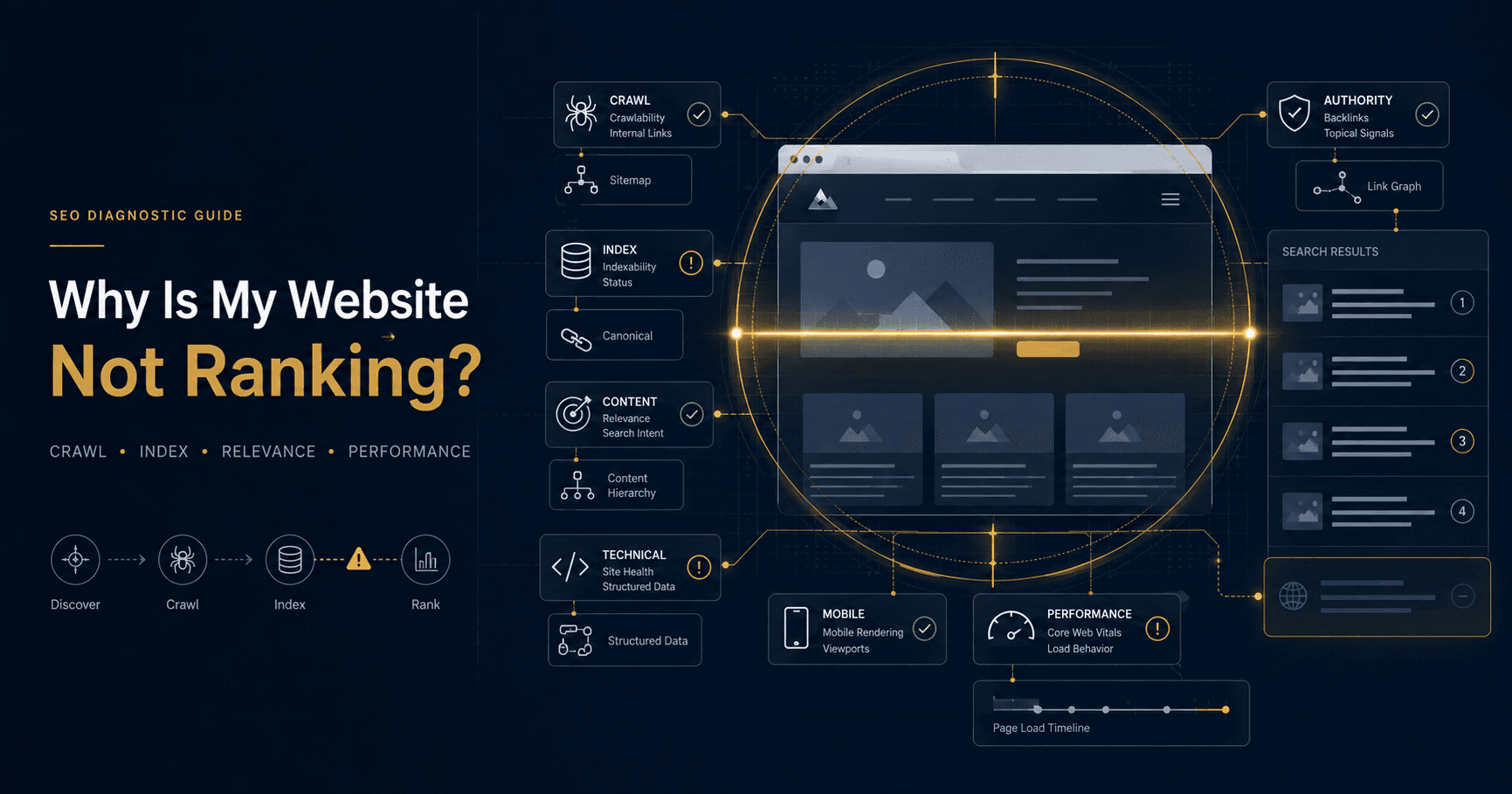
In contrast, AI Mode (powered by a custom deployment of Gemini 2.5) evaluates a broader pool averaging nine distinct domains per query. In AI Mode, topical freshness, specific passage clarity, and entity authority frequently outperform raw organic ranking positions. If your site has suffered unexplained organic drops, review our diagnostic guide on why your website is not ranking on Google to resolve core indexation hurdles, and examine the financial cost of poor Core Web Vitals and INP.
ChatGPT Search
OpenAI's search experience relies heavily on trusted third-party reference sources and verified publications. Over 47% of reference citations trace back to Wikipedia, followed by Reddit, primary research journals, and high-tier news outlets. Earning digital PR coverage and authoritative external brand citations is the single fastest way to penetrate ChatGPT Search answers.
Perplexity AI
Perplexity behaves like an interactive research engine, processing real-time queries with citations linked to numbered footnotes. It heavily favors well-formatted comparison tables, ordered numerical lists, and peer-reviewed or statistical evidence. Structuring your technical content with concise data tables drastically improves your citation frequency in Perplexity answers.
The 7-Step GEO Audit Checklist for US Businesses
To determine whether your digital presence is prepared for the generative search era, evaluate your website against this operational checklist:
- Verify AI Crawler Permissions: Inspect your
robots.txtfile to ensure you are not inadvertently blockingGPTBot,OAI-SearchBot,ClaudeBot, orPerplexityBot. - Audit Server-Side Rendering: Disable JavaScript in your browser developer tools and reload your core service pages. If the content disappears, AI search engines cannot read your website.
- Front-Load Definitions: Ensure every informative page provides a crisp 40–60 word direct answer to its primary target query above the fold.
- Format Optimal Passages: Break long walls of text into 134–167 word semantic sections with question-based
<h2>and<h3>headings. - Inject Multi-Platform Entity Schema: Deploy nested JSON-LD schemas linking your brand entity to official external directory profiles and executive author credentials.
- Monitor Brand Co-Occurrences: Track unlinked brand mentions across Reddit, YouTube, industry podcasts, and B2B review platforms.
- Establish a 90-Day Freshness Cycle: Review and refresh high-priority commercial and educational pages at least once every three months.
Engineer Your AI Search Advantage with Go Execution
Generative search is not a future projection—it is the operating reality of modern digital commerce. Brands that cling to outdated keyword stuffing and superficial link schemes are watching their visibility evaporate into zero-click generative summaries. Forward-thinking companies that re-engineer their platforms for entity authority, modular citability, and lightning-fast server rendering are capturing the highest-intent buyers in their sectors.
At Go Execution, we combine enterprise engineering with search intelligence. From building high-performance Custom Web Applications on Next.js to executing data-driven Enterprise SEO Services and Ecommerce SEO, we ensure your brand commands authority across every search surface.
Is your business ready for the generative search transition? Schedule a comprehensive GEO consultation with Go Execution today and secure your brand's position in the AI answers of tomorrow.