How Long Does SEO Take for a New Website? A Realistic Timeline
Learn how long SEO can take for a new website, from discovery and indexing to content development, technical validation, and search visibility.
The most common question we hear from founders launching a new site is: "How long does SEO take for a new website?"
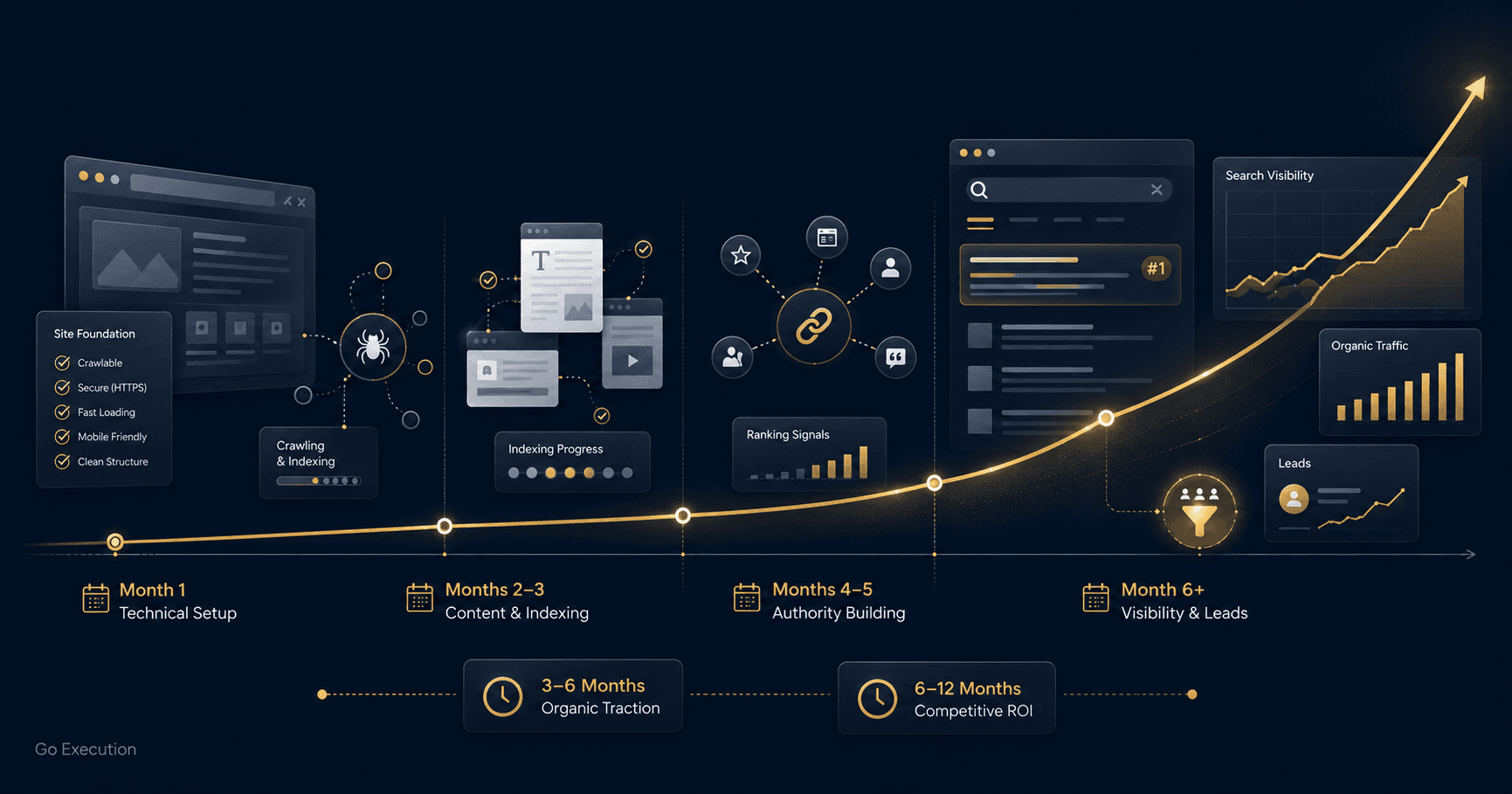
While there is no guaranteed deadline, a brand-new domain (often sitting in what the industry calls the "Google Sandbox") typically requires 3 to 6 months to start seeing meaningful organic traction, and 6 to 12 months to achieve a positive ROI on competitive commercial keywords.
Why SEO Takes Time
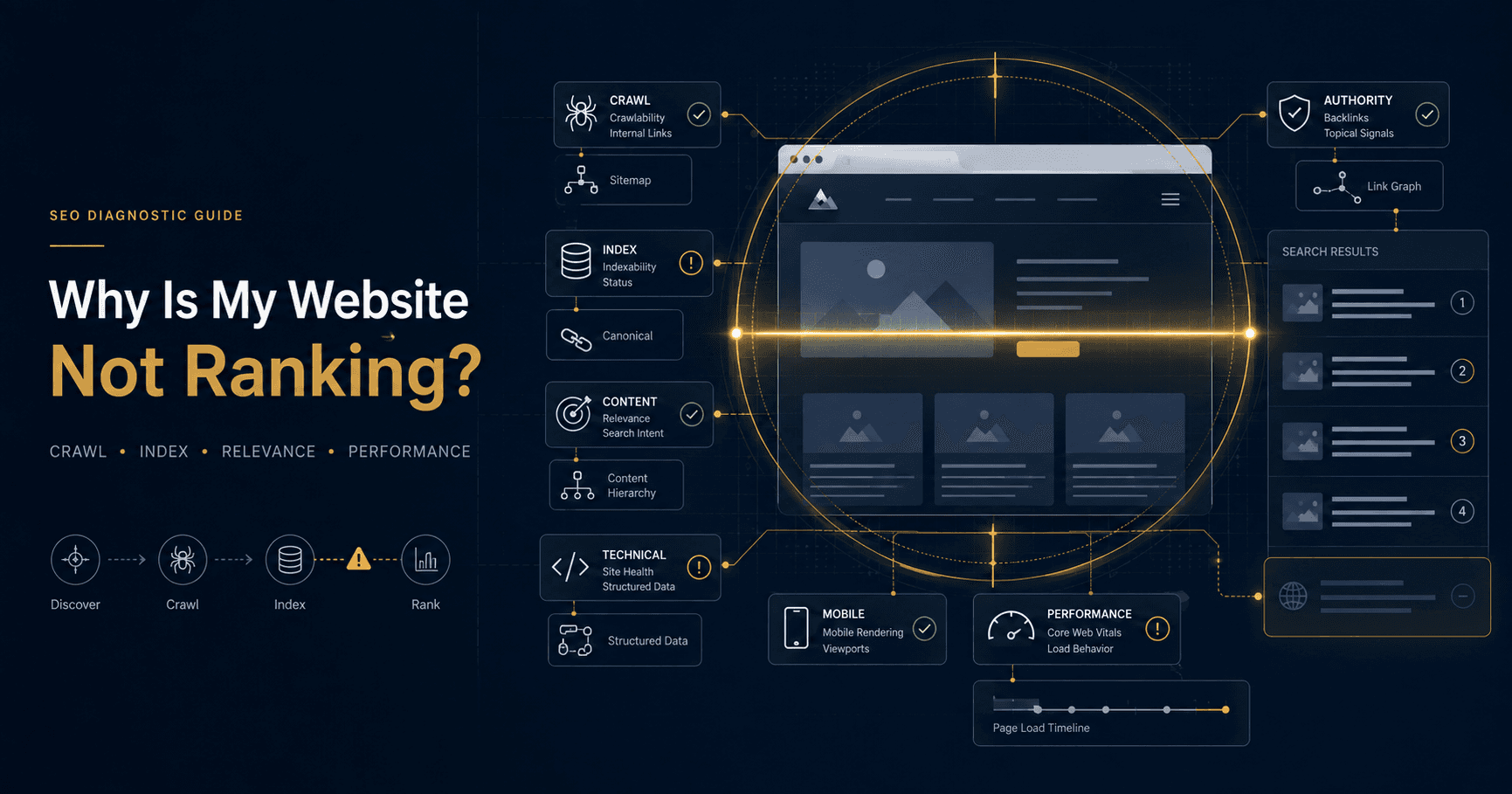
Search engines do not process web content in a simple, step-by-step manner. According to Google's How Search Works guide, the process involves crawling, rendering, indexing, and ongoing quality evaluation. Because your domain has no historical trust, Google needs time to verify your authority and consistency. If your new domain struggles to get indexed, see our diagnostic guide on why your website is not ranking on Google.
Learn more about how infrastructure optimization speeds up this process on our Technical SEO Services page.
The 6-Month SEO Growth Trajectory
Month 1: Discovery & Technical Setup
In the first month, the primary goal is ensuring Googlebot can crawl and index your site without roadblocks. We submit XML sitemaps, verify Search Console, and resolve any rendering issues. A fast framework is crucial here—modern Next.js development services guarantee instant server-side rendering; see our guide on WordPress vs Next.js to understand the impact of your tech stack.
Months 2-3: Content Indexing & Keyword Mapping
During this phase, we focus on index coverage. Google starts evaluating your content's relevance against competitors. We publish foundational pillar pages through structured content marketing services and interlink them to establish topical authority. You'll likely see your first impressions for long-tail keywords, though clicks may still be low.
Months 4-5: Ranking Fluctuations & Authority Building
This is when the "Google Dance" happens. Your rankings may jump from page 2 to page 5 and back as Google tests your user engagement metrics. At this stage, acquiring high-quality backlinks and improving internal linking structure is critical to stabilize your positions.
Month 6+: Search Visibility & Lead Generation
By month six, a well-executed strategy starts yielding consistent organic traffic. The compounding nature of SEO kicks in. If you're a local business, this is when your Google Business Profile and local citations start driving highly qualified local leads through targeted local SEO services. Check our Small Business SEO Services for targeted growth strategies.
Can You Speed It Up?
Yes, by avoiding technical debt from day one and running targeted PPC management campaigns to capture high-intent leads while organic authority matures. If you are migrating an existing site to a new domain, read our guide on redesigning a website without losing SEO to prevent massive ranking drops.
If you're ready to get a customized roadmap for your website, contact the Go Execution team today.