How to Redesign a Website Without Losing SEO Rankings
A step-by-step guide to executing a website redesign while protecting historical organic traffic, backlink equity, and search engine rankings.
A website redesign is an exciting opportunity to modernize your brand, improve user experience, and increase conversion rates. However, if executed without a strict SEO migration plan, a redesign can be catastrophic for your organic traffic, causing you to lose years of hard-earned search engine rankings overnight.
Why Redesigns Destroy SEO (If Done Wrong)
When you launch a new website, you are often changing URLs, altering site architecture, modifying heading tags, and sometimes moving to an entirely new CMS (like migrating from WordPress to Next.js—see our guide on WordPress vs Next.js for business websites). To Google, this looks like an entirely new website. If search engines cannot trace the path from your old pages to your new pages, they will drop your old pages from the index and start from scratch.
The Step-by-Step SEO Migration Plan
1. Pre-Launch: The URL Redirect Map (The Most Critical Step)
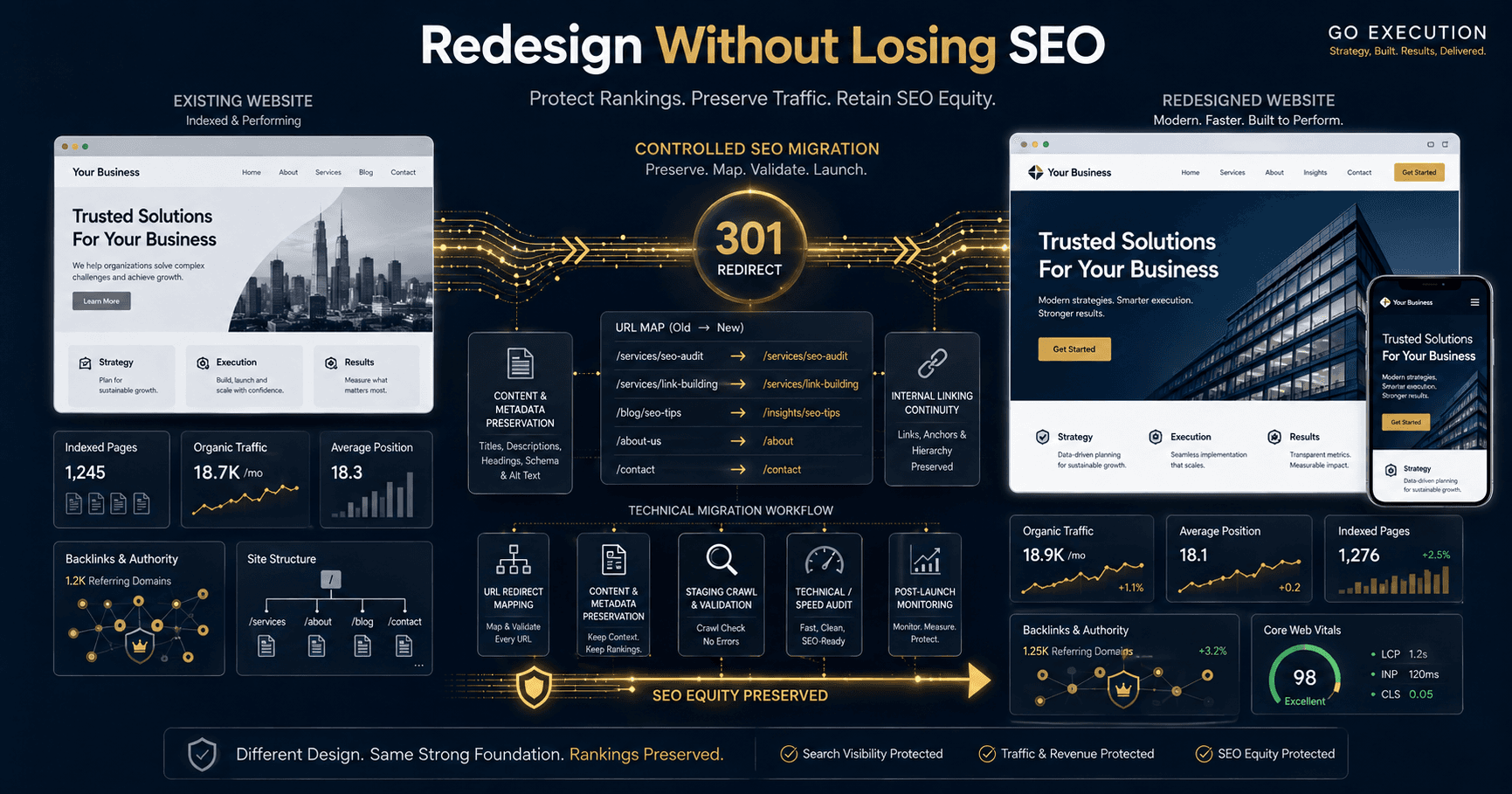
Before writing a single line of new code, you must catalog every indexable URL on your existing website. Tools like Screaming Frog can help crawl your current site. You must then create a comprehensive 1-to-1 spreadsheet mapping your old URLs to your new canonical URLs.
On launch day, every old URL must have a permanent 301 Redirect pointing to its new counterpart. Our technical SEO services team audits redirect chains and crawl maps to ensure zero link equity is lost during cutover.
2. Content & On-Page Preservation
Search engines rank your pages based on their content. If you rewrite all your copy and remove your target keywords during the redesign, your rankings will drop even if the URLs stay the same. Aligning new page copy with a cohesive content marketing strategy ensures you preserve established search rankings while capturing new keyword demand. Ensure that:
- Primary H1 tags remain highly relevant to your target keywords.
- Body copy length and keyword density are preserved or strategically enhanced.
- Title tags and Meta descriptions are carried over or improved.
3. Staging Environment Crawl
Before launching, crawl your staging site. Ensure that the staging site is blocking search engines (using a robots.txt disallow or a password) so it isn't indexed prematurely, but verify that your internal linking structure is sound, there are no broken links (404s), and your new XML sitemap is ready.
4. Technical & Speed Auditing
A new design often brings new JavaScript frameworks or heavy images. Verify that your new platform delivers high-performance page performance and passes Core Web Vitals by building on modern custom web development platforms. Learn more about performance standards on our Website Speed Optimization Services page.
5. Post-Launch Monitoring
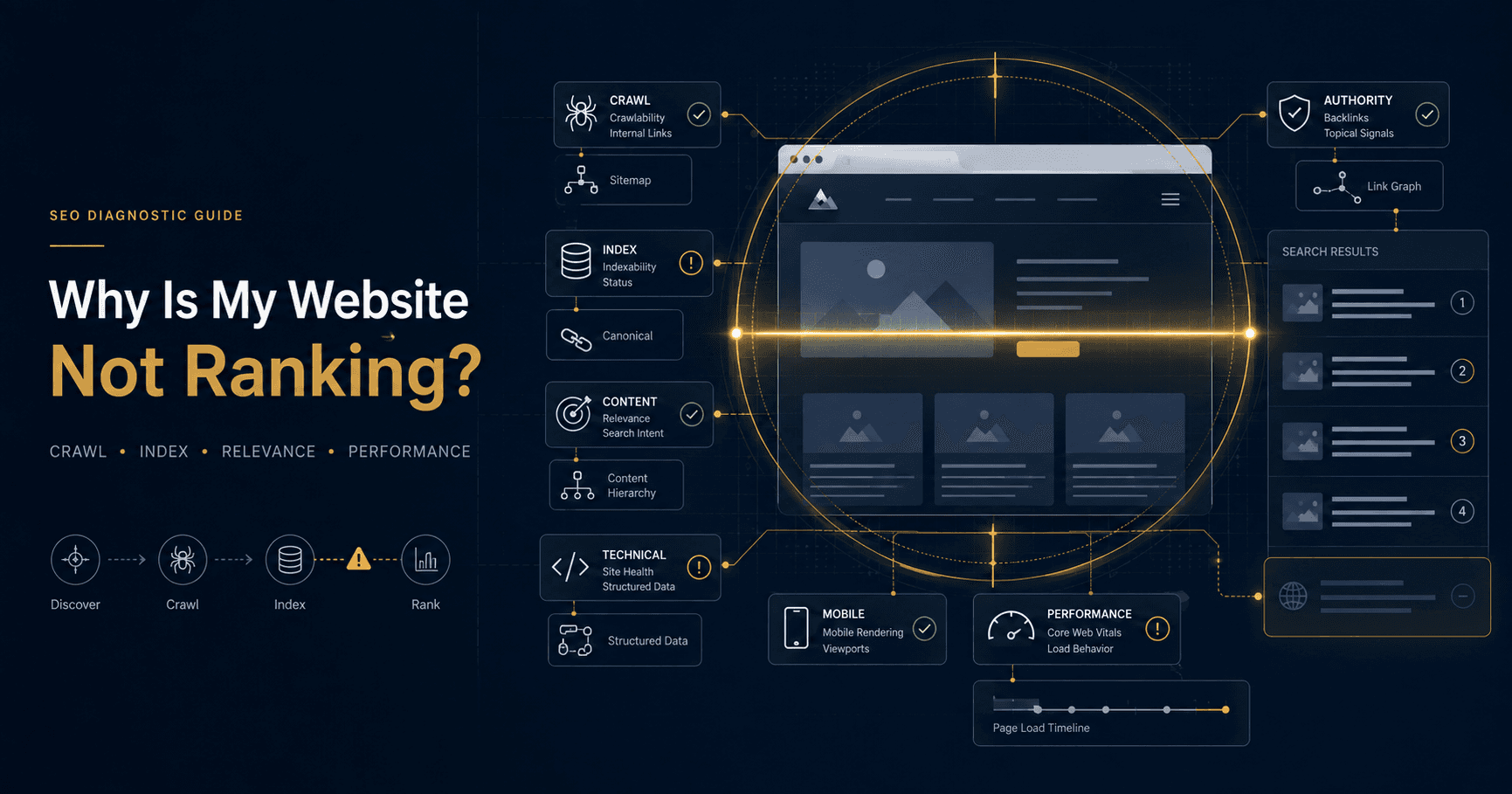
Immediately after launch, submit your new XML sitemap to Google Search Console. Monitor the "Coverage" report closely for the next 4 weeks to catch any 404 errors or redirect loops early. If indexing lags persist, review our diagnostic order on why your website is not ranking on Google.
Planning a redesign? Don't leave your traffic to chance. Partner with Go Execution's team to ensure a flawless transition. Visit our Website Redesign Services page or get in touch today.