What Is Technical SEO? A Complete Guide for US Businesses
Discover the fundamentals of technical SEO including crawl efficiency, indexing controls, schema markup, Core Web Vitals, and site speed.
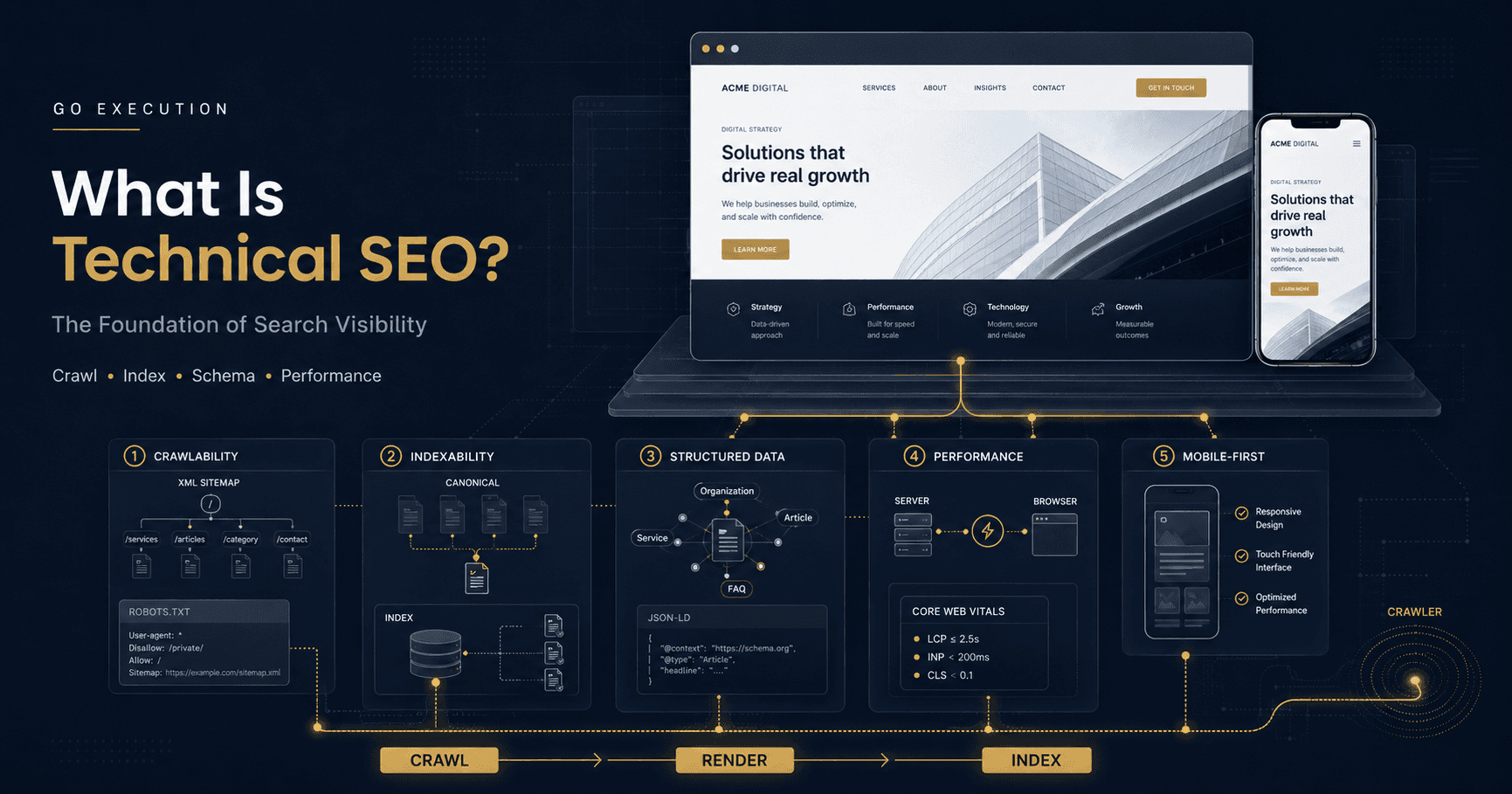
Technical SEO is the foundation of any successful digital marketing strategy. While content creation and link building often get the spotlight, technical SEO ensures that search engines can actually find, read, and understand that content. It refers to optimizing a website's underlying code, server infrastructure, and architecture so search engines can easily crawl, render, index, and rank its pages.
Why Technical SEO Matters
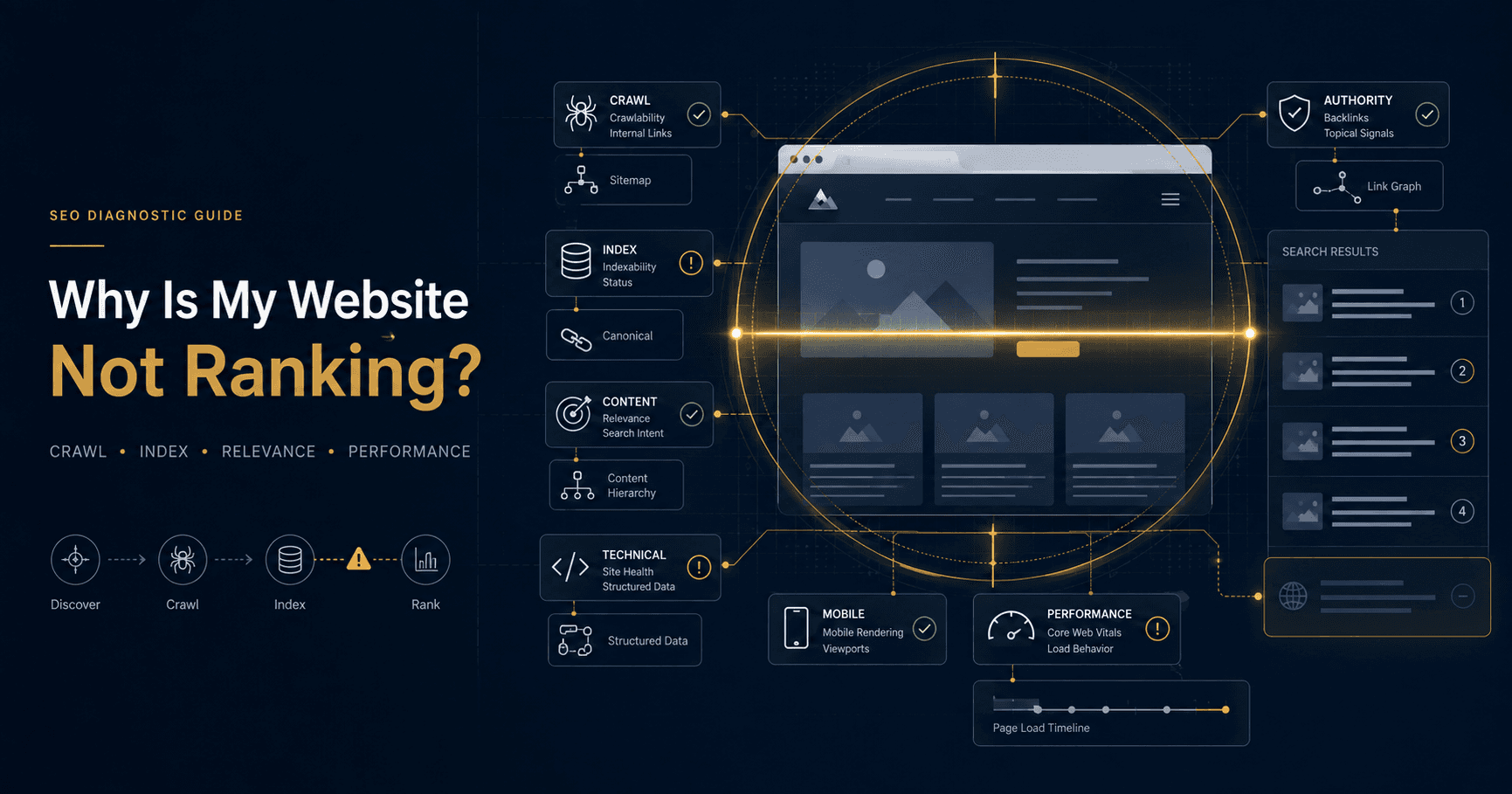
Imagine building a beautiful storefront in the middle of a desert without any roads leading to it. That's what a website with poor technical SEO is like. If Google bots encounter infinite redirect loops, blocked JavaScript, or 500 server errors, they will abandon the crawl, leaving your best content unindexed and invisible to potential customers. If your site is currently losing visibility, follow our diagnostic order in why is my website not ranking on Google.
Key Pillars of Technical SEO
1. Crawlability & Indexability
This is the first hurdle. Search engines must be able to discover your pages. Key elements include:
- Robots.txt: Directives telling search engine bots which directories they are allowed (or disallowed) to crawl.
- XML Sitemaps: A roadmap of your site's important URLs to ensure efficient crawling.
- HTTP Status Codes: Ensuring critical pages return a 200 OK status, and broken pages return a 404 Not Found, rather than soft 404s.
- Canonicalization: Using rel="canonical" tags to prevent duplicate content issues when multiple URLs point to the same content. For enterprise websites with millions of pages, crawl efficiency requires advanced enterprise SEO strategies.
2. Website Performance & Core Web Vitals
Google now actively uses real-world user experience metrics, known as Core Web Vitals, as ranking signals. These measure loading performance, interactivity, and visual stability.
- Largest Contentful Paint (LCP): Measures how fast the main content loads. Must be under 2.5 seconds.
- Interaction to Next Paint (INP): Measures responsiveness to user input. Should be under 200 milliseconds.
- Cumulative Layout Shift (CLS): Measures visual stability (preventing buttons from jumping around as the page loads). Must be under 0.1.
To improve your scores, explore our Website Speed Optimization Services and review our deep dive on the financial cost of poor Core Web Vitals and INP.
3. Structured Data (Schema Markup)
Structured data provides explicit clues about the meaning of a page to search engines using a standardized vocabulary (Schema.org). By adding JSON-LD schema graphs for Organization, Services, Articles, LocalBusiness, and FAQs, you can earn rich snippets in the search results, dramatically increasing click-through rates. For local companies, pairing schema with local SEO services ensures map pack dominance.
4. Mobile-First Optimization
Google overwhelmingly uses the mobile version of a site for indexing and ranking. A responsive design is no longer optional—it's mandatory. Your site must render perfectly on all devices, with accessible touch targets and fast mobile load times—which is why modern architectures rely on Next.js development services or bespoke custom web development.
To audit your site's health and fix critical technical barriers, visit our dedicated Technical SEO Services page or contact our technical team to request a comprehensive audit.